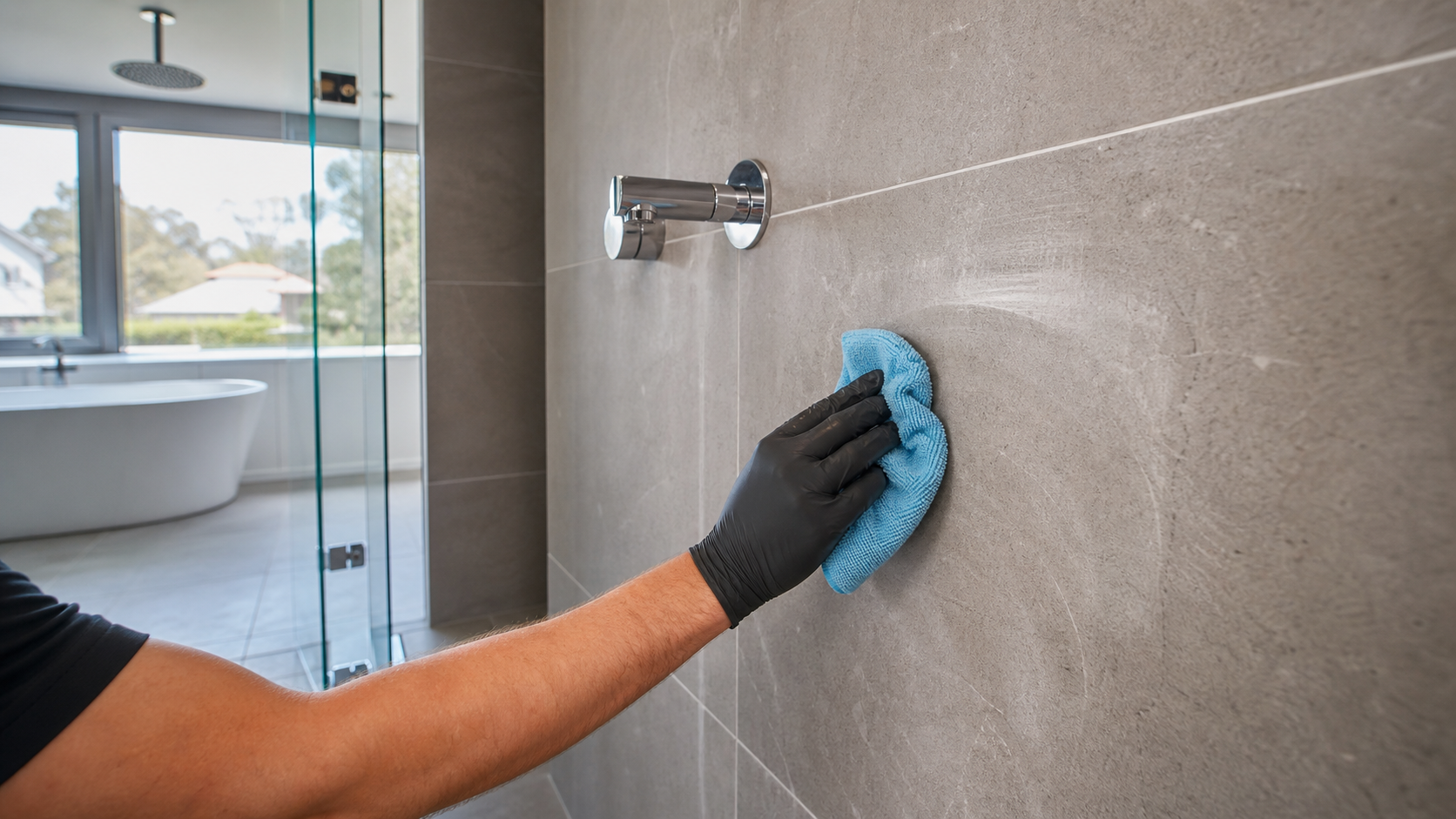
Grout haze removal on a new build is one of those small details that can change how the whole handover feels. When tile grout dries, a light mineral film can remain on the face of the tile. Under bathroom lighting, balcony light or a client walk-through, that film reads as cloudy, dirty, unfinished or poorly cleaned.
One X Done scopes grout haze as part of the construction cleaning sequence, especially around handover cleaning, sparkle cleans and practical completion cleaning. It is different from ordinary dusting and needs to be identified before the final clean is treated as complete.
Where Grout Haze Shows Up
Wall tiles, shower niches, floor wastes, hob edges and shower screens make cloudy residue obvious during practical completion.
Small tile runs can still hold haze around tapware, silicone lines, benchtop junctions and cabinet returns.
Natural light exposes haze, mop marks, tile dust, adhesive residue and footprints across larger tiled surfaces.
What Grout Haze Is
Grout haze is the residue left behind when grout water or fine grout particles dry on the tile surface. It can look like a grey film, white clouding, patchy dullness or streaking. On textured tiles, grout haze can sit deeper in the surface profile and take more work to release.
- Standard mopping can spread haze rather than remove it
- Textured and matte tiles can hold residue more visibly than gloss tiles
- Dark tiles often show pale grout film and wipe marks clearly
- Acid-sensitive stone and specialty finishes need careful product selection
- Late trade dust can mix with grout residue and make the surface look worse
Why It Matters Before Handover
Grout haze is a presentation problem and a defect-risk problem. During PCI, the client may not know whether they are looking at residue, a cleaning issue, tile damage or poor workmanship. That uncertainty creates questions, callbacks and pressure on the supervisor when the home should feel finished.
It also competes with other final-clean issues like construction dust, silicone residue, adhesive smears, paint specks and trade footprints. If those issues are not separated properly, the crew can waste time treating the wrong problem.
Why Timing Matters
Grout haze should be identified once tiling and grouting are complete, but before the final sparkle is expected to make the home key-ready. If tilers, painters, plumbers or defect trades are still moving through the wet areas, the clean may need to be sequenced around their return visits.
How One X Done Handles Grout Haze
We look at the tile type, residue level, location, access, trade timing and whether the area is part of a broader handover or sparkle clean. A tiled wet area in Box Hill NSW may need a different approach to a tiled balcony in Marsden Park, especially when defect trades are still booked.
If grout haze is showing before handover, send the site suburb, tile areas, stage and timing. We will scope whether it belongs in the handover clean, a targeted reset, or the final sparkle clean and return a trade quote within 48 hours.